Souss-Massa National Park is one of Morocco’s most spectacular and underrated natural treasures — a vast coastal wilderness stretching 33,800 hectares along the Atlantic south of Agadir. Here, golden sand dunes meet river estuaries, argan forests blend into coastal cliffs, and some of Africa’s rarest animals roam freely under a Moroccan sky. If you are visiting Agadir and want to experience nature at its most raw and wild, Souss-Massa is the destination you cannot afford to miss.
What Is Souss-Massa National Park?
Established in 1991, Souss-Massa National Park was created to protect the rich biodiversity of the Souss and Massa river estuaries along Morocco’s Atlantic coast. Located just 40 km south of Agadir between the towns of Inezgane and Sidi Rbat, the park encompasses a stunning mosaic of habitats: coastal lagoons, riverine wetlands, open grasslands, argan woodlands, and dramatic sea cliffs. It is officially listed as a Ramsar Wetland of International Importance, recognising its critical role as a staging ground for migratory birds travelling between Europe and sub-Saharan Africa.
The park is managed by the Haut Commissariat aux Eaux et Forêts et à la Lutte Contre la Désertification (HCEFLCD) and forms a cornerstone of Morocco’s conservation efforts, particularly for critically endangered species that once faced extinction.
The Wildlife of Souss-Massa: Africa’s Rarest Animals
What truly sets Souss-Massa apart from any other destination near Agadir is its extraordinary wildlife. The park is a sanctuary for species that have disappeared from most of their former range, and visiting here feels like stepping into a living conservation story.
The Northern Bald Ibis — Morocco’s Sacred Bird
If there is one animal that defines Souss-Massa National Park, it is the Northern Bald Ibis (Geronticus eremita). With its dark, iridescent plumage shimmering between deep green and purple, its naked red face, and its extraordinary curved beak, the bald ibis is one of the most ancient and unusual birds on earth. It appears in ancient Egyptian hieroglyphs, and was considered sacred across the ancient world — yet by the late twentieth century it had been pushed to the very edge of extinction.
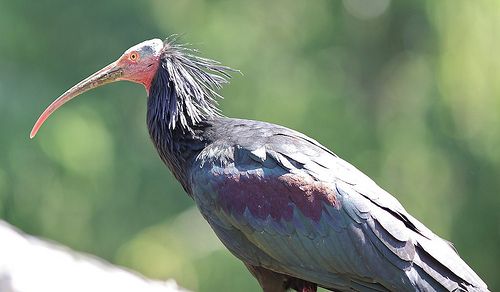
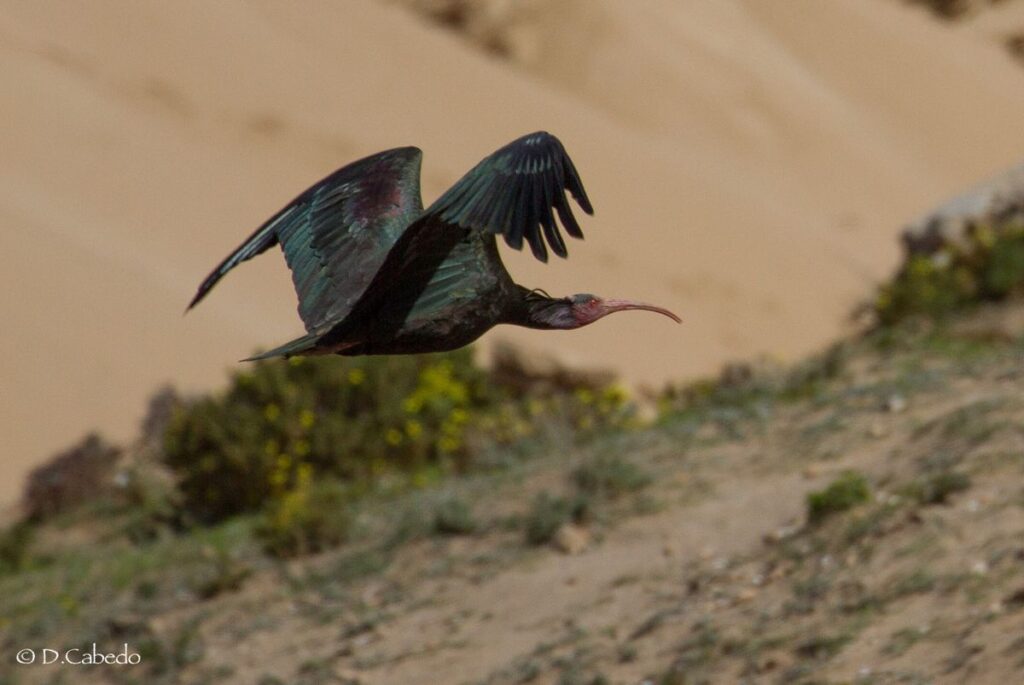
Today, Morocco is home to the only viable wild population in the world, and Souss-Massa is their primary stronghold. The colony nests on dramatic sea cliffs within the park, and visitors who time their trips right — particularly between February and July during breeding season — may witness dozens of these extraordinary birds in flight, swooping low over the Atlantic with their iridescent wings catching the light. Seeing a bald ibis soar above the coastal dunes is genuinely one of the most remarkable wildlife encounters available anywhere in North Africa.
The Addax — Ghost of the Sahara
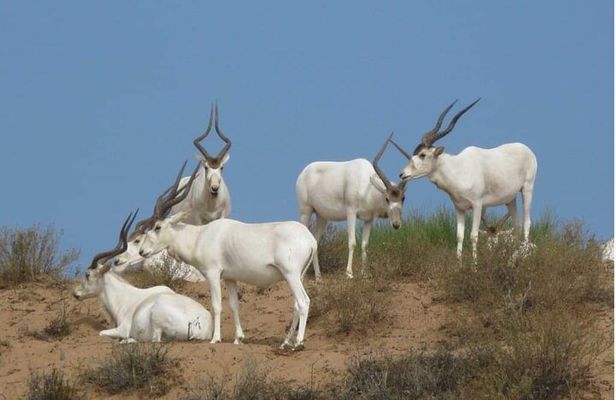
Souss-Massa is also a key site for the reintroduction of the Addax (Addax nasomaculatus), one of the most critically endangered large mammals on earth. Once roaming the entire Sahara Desert in great herds, the addax has been nearly wiped out by hunting and habitat loss — fewer than 100 individuals may survive in the wild outside protected areas. The addax is a large, pale antelope with extraordinarily long spiralling horns that twist dramatically upward from a brown patch on its forehead. Its creamy-white coat is perfectly adapted to desert conditions, reflecting the fierce North African sun.
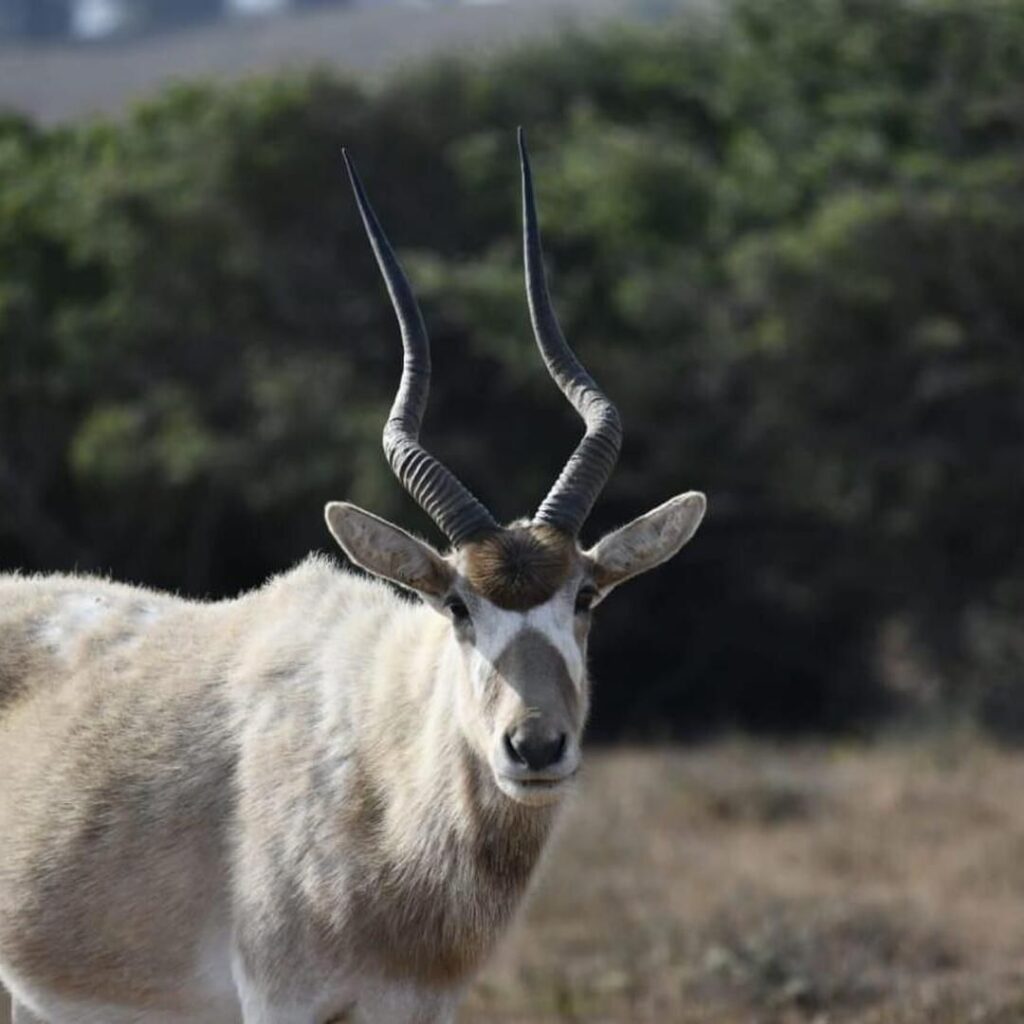
Within Souss-Massa, a semi-free roaming population of addax can be spotted resting on sandy hillsides or grazing in small groups — a sight that is simultaneously beautiful and deeply moving when you understand how close this animal came to permanent extinction. The park’s breeding programme has been crucial to the species’ survival, and seeing a small herd of addax silhouetted against a blue Moroccan sky represents conservation at its most hopeful.
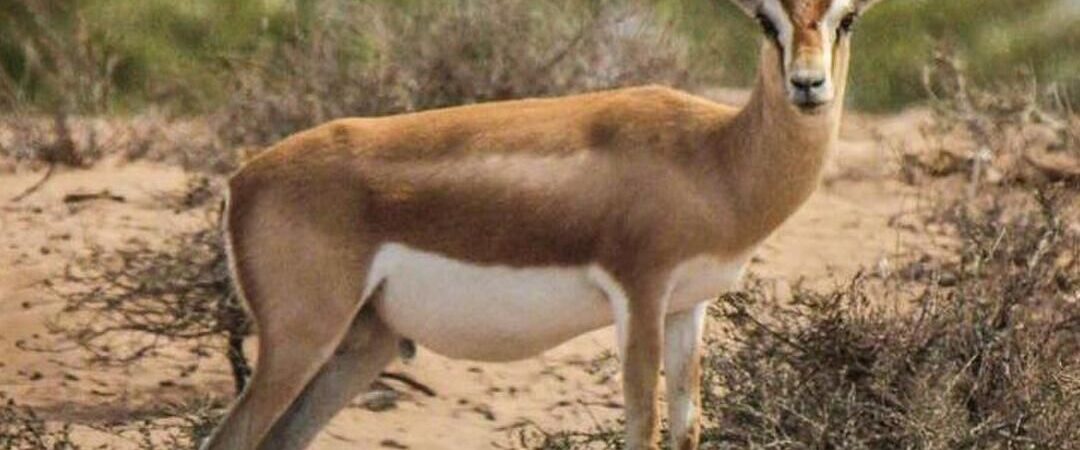
Dorcas Gazelle — The Desert Dancer
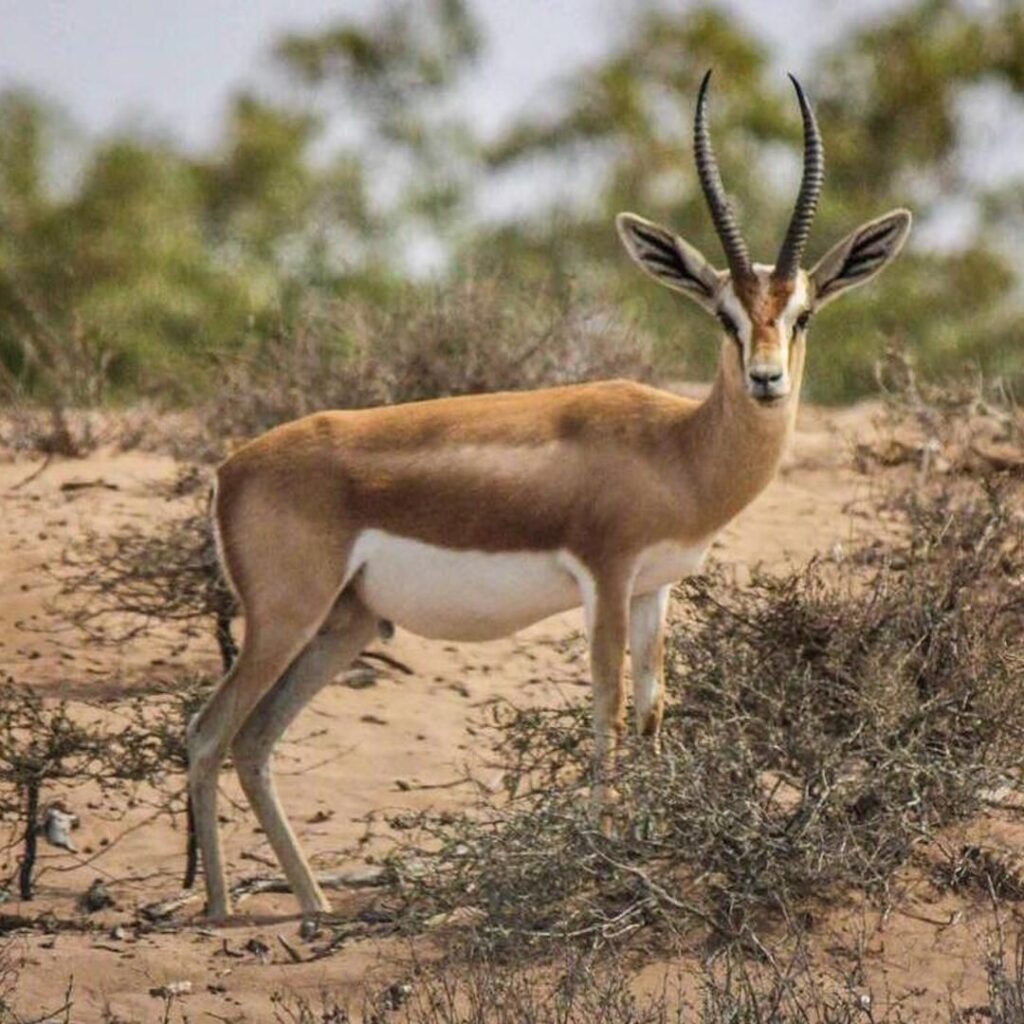
The Dorcas Gazelle (Gazella dorcas) is perhaps the most graceful resident of Souss-Massa. Smaller and more slender than the addax, the dorcas gazelle is a tawny-coloured beauty with elegant curved horns and striking facial markings — bold black and white stripes run from its eyes to its muzzle, giving it an almost painted appearance. These gazelles move with extraordinary lightness across the sandy terrain, pausing to observe visitors with a calm, curious intelligence before bounding away in effortless arcs.
The dorcas gazelle is well adapted to arid conditions and can survive long periods without drinking, obtaining most of its water from the plants it eats. Within the park’s varied landscape of dunes, scrubland, and grassland, small groups of dorcas gazelle are often visible in the early morning and late afternoon. Spotting them in the golden light of a Moroccan sunrise is an experience that stays with visitors long after they leave.
Greater Flamingos — Pink Against the Blue Atlantic
The estuaries of the Souss and Massa rivers provide perfect habitat for one of nature’s most photogenic spectacles: large flocks of Greater Flamingos (Phoenicopterus roseus) wading in the shallow coastal waters. These elegant pink birds gather in the park’s lagoons in their hundreds, standing in shallow water with their distinctive downward-curved bills sweeping through the mud for algae and crustaceans. Seen against the backdrop of golden sand dunes and the deep blue Atlantic, a flamingo gathering at Souss-Massa is one of the most visually stunning wildlife scenes anywhere in Morocco.
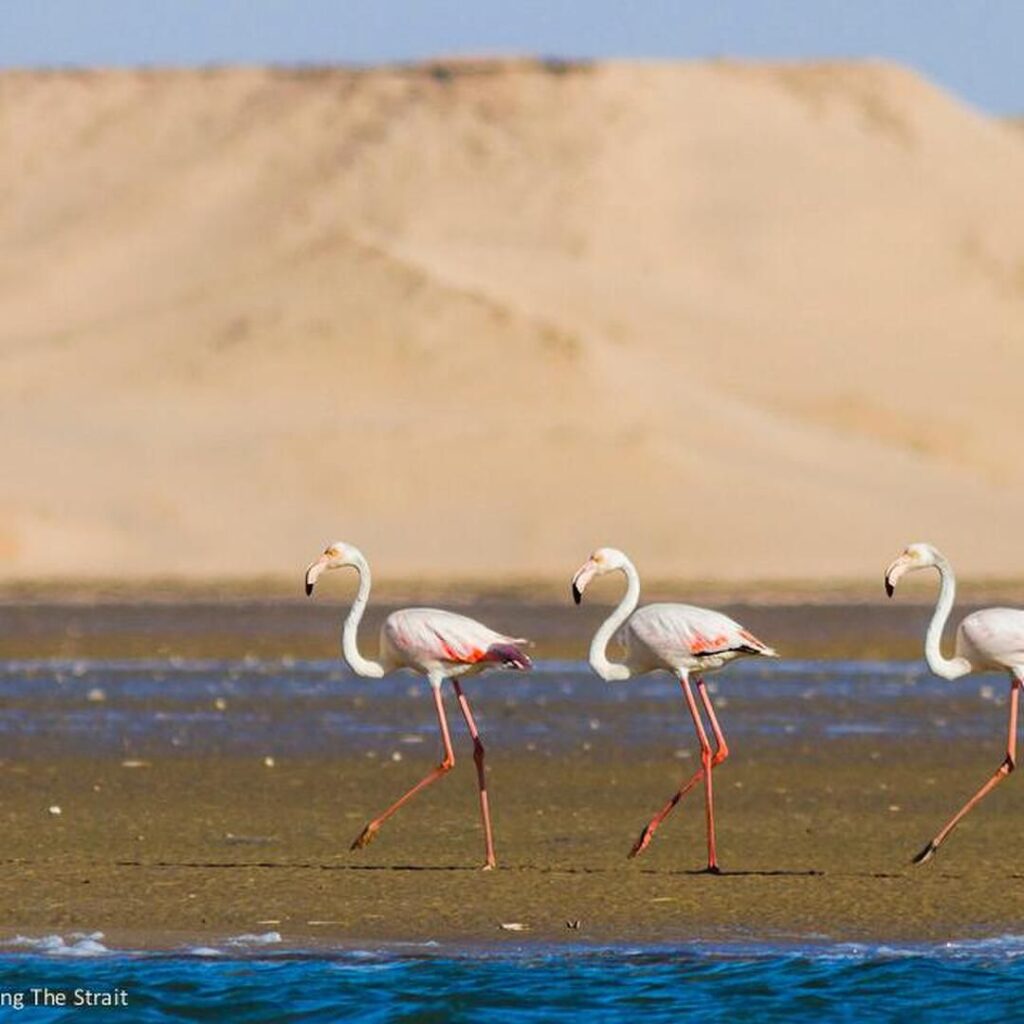
Flamingo numbers peak during winter months when European populations migrate south, though the species is present in the park year-round. The estuary at Sidi Rbat is particularly productive for flamingo sightings, especially in the early morning before human activity disturbs the birds.
Birdwatching in Souss-Massa National Park
Beyond its flagship species, Souss-Massa National Park is one of the finest birdwatching destinations in the entire western Palearctic. Over 270 bird species have been recorded in the park, drawn by the exceptional diversity of habitats compressed into a relatively small area. The river estuaries attract wading birds, waterfowl, and gulls; the coastal scrubland hosts migrant warblers and chats; the open grasslands support larks, bustards, and raptors; and the sea cliffs provide nesting sites for peregrine falcons, kestrels, and of course the iconic bald ibis.
Key species to look for include Eleonora’s Falcon (present in summer), Audouin’s Gull, Little Egret, Purple Heron, Black-winged Stilt, Kentish Plover, and dozens of migrant passerines that stop to refuel at the estuary in spring and autumn. Serious birdwatchers often combine a visit to Souss-Massa with the argan woodlands further inland, where Moussier’s Redstart, African Blue Tit, and Levaillant’s Woodpecker can be found.
How to Visit Souss-Massa National Park
Getting There from Agadir
Souss-Massa National Park is easily accessible from Agadir, making it a perfect day trip. The main entrance near Sidi Rbat is approximately 40 km south of Agadir city centre, a drive of about 45 minutes along the coastal road. You can reach the park by rented car (the most flexible option — head south on the N1 toward Tiznit, then follow signs to Sidi Rbat), by guided tour from Agadir, or by grand taxi from Inezgane.
Best Time to Visit
Spring (March–May) is peak season for birdwatching, with breeding bald ibis activity and large numbers of migrating birds. Winter (November–February) brings the largest flamingo gatherings and wintering ducks and waders. Summer is quieter but Eleonora’s Falcons are present. Autumn (September–November) sees another migration peak with diverse raptor movements. Early morning is always the best time to visit — arrive at the estuary at or before sunrise for the most active wildlife.
Park Rules and Visitor Information
- Entry permits required — available at the park entrance at Sidi Rbat
- Stay on marked trails and designated viewing areas
- No off-road driving within the protected zone
- Keep noise to a minimum near the estuary and ibis nesting cliffs
- No feeding of wildlife
- Photography permitted — drones require special authorization
Conservation: Why Souss-Massa Matters
Souss-Massa National Park is not simply a beautiful place to visit — it is an active conservation battleground where the fate of some of the world’s most endangered species is being determined. The park’s bald ibis colony is monitored intensively each year. The addax reintroduction programme has provided a vital reservoir population contributing to reintroduction efforts across North Africa. The park also plays a critical role in environmental education for Moroccan communities. When you visit Souss-Massa, your entrance fee directly supports these conservation activities.
Practical Tips for Your Visit
- Binoculars are essential — bring at least 8x magnification for watching bald ibis and flamingos
- Wear neutral colours — avoid bright clothing that may disturb wildlife
- Bring sun protection — UV levels are high year-round in southern Morocco
- Carry water and snacks — facilities inside the park are limited
- A telephoto lens (200mm or longer) will greatly enhance wildlife photography
- Combine with Massa Beach — the village and beach at Massa make a perfect lunch stop
Souss-Massa National Park: A Final Word
There are many reasons to visit Agadir — the beaches, the food, the warmth, the culture — but Souss-Massa National Park offers something that no beach or medina can match: genuine, unscripted wilderness. To stand quietly at the edge of the Massa estuary as a hundred flamingos take to the sky, or to watch a bald ibis glide silently along the Atlantic cliffs on a still morning, is to experience Morocco at its most elemental and its most moving.
Souss-Massa is not merely a day trip from Agadir. It is a reason to come to Agadir in the first place. Plan your visit, rise early, and let the park surprise you.
Have you visited Souss-Massa National Park? Share your wildlife sightings and tips in the comments below!