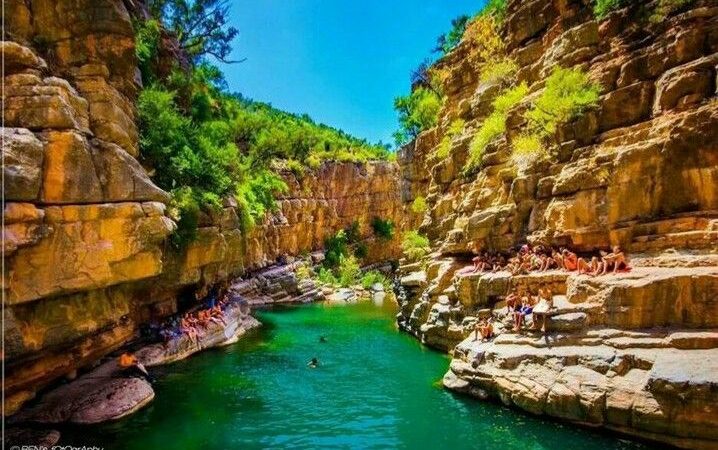
Paradise Valley Agadir is one of Morocco’s most extraordinary natural secrets… — a hidden gorge of red and ochre sandstone, emerald pools and wild palm trees carved into the Anti-Atlas mountains just 60 km northeast of Agadir. Once you see it, you understand immediately how it got its name.
The valley does not announce itself. You drive through the argan forest, the road narrows, the hills close in, and then — suddenly — the gorge opens before you and the world changes completely. Crystal-clear mountain water winds between walls of sculpted red rock, forming a series of natural swimming pools that look, genuinely, like paradise.
What is Paradise Valley?
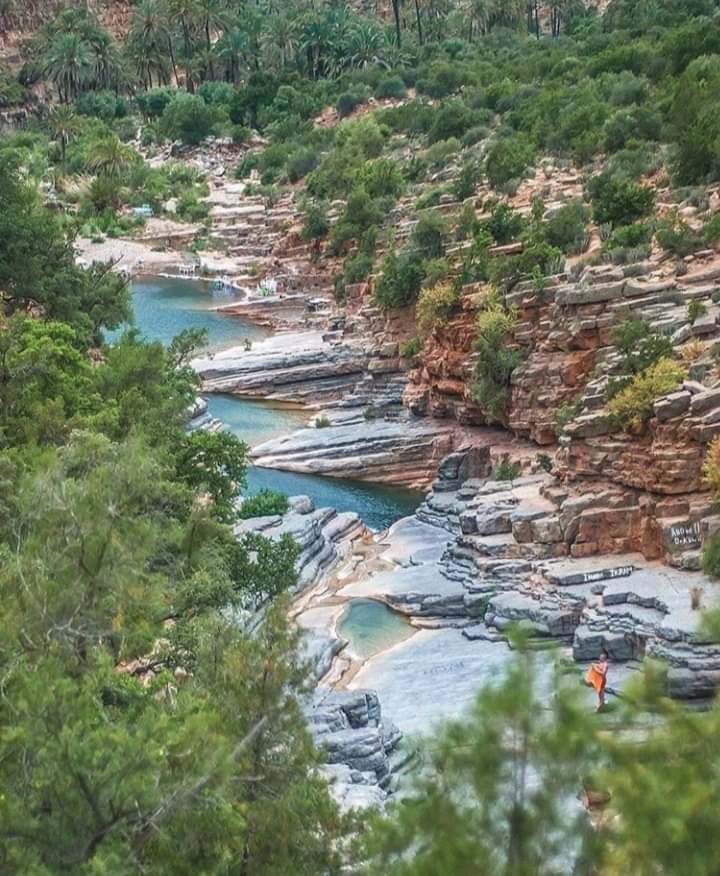
Paradise Valley — known locally as Aït Benhaddou or simply as the valley — is a river gorge formed by the Aït Belfaa river as it descends from the Anti-Atlas mountains toward the Souss plain. Over millions of years, the river has carved through layers of Precambrian sandstone to create a spectacular canyon of warm-colored rock walls, natural terraces and rock pools filled with clear mountain water.
The valley sits at an altitude of approximately 400 to 600 meters, making it noticeably cooler than the coast even in summer. The combination of altitude, water and the shade of the gorge walls creates a microclimate that feels like a natural air conditioning system — a blessed relief when temperatures in Agadir are pushing 35 degrees C or more.
The vegetation in the gorge is lush and diverse: date palms, fig trees, oleander, wild herbs and numerous plant species that thrive in the moisture of the valley floor. Birds sing from the cliff faces. Frogs call from the pools. It is a world completely apart from the sun-baked landscape outside the gorge.
The Pools: Nature’s Swimming Holes
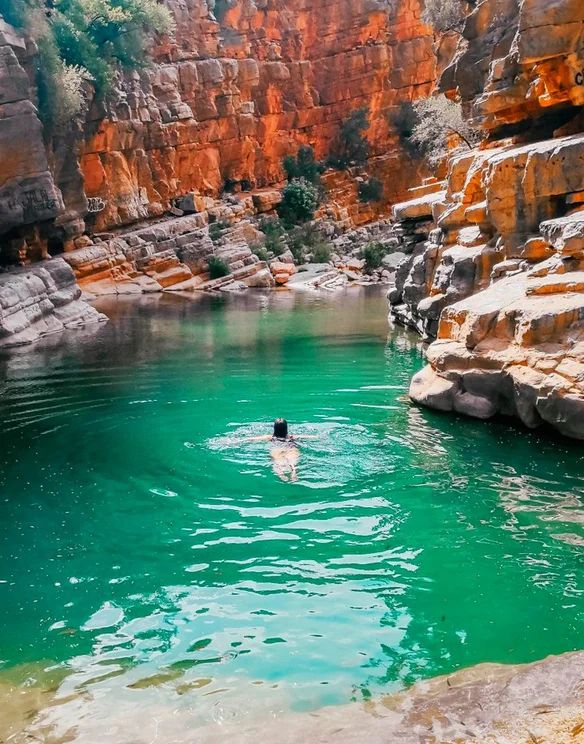
The heart of Paradise Valley is its series of natural rock pools — basins carved by centuries of flowing water into the smooth sandstone of the gorge floor. These pools range from shallow wading areas to deep, clear swimming holes where the water is cold enough to take your breath away on a hot day.
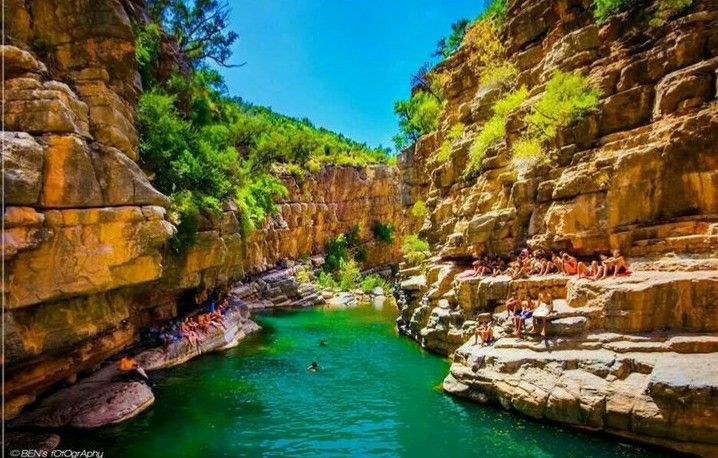
The water in the pools comes directly from mountain springs and seasonal rainfall, filtered through layers of rock before emerging in the valley. It is exceptionally clear — you can see every stone on the bottom, every ripple from a diving swimmer. The color shifts depending on the light and depth: pale turquoise in the shallows, a deep emerald green in the deeper pools, a brilliant jade where the sunlight catches the water at midday.
The rocks surrounding the pools have been smoothed by water and sun into perfect natural terraces — flat ledges ideal for sunbathing, drying off after a swim, or simply sitting with your feet in the water watching the play of light on the rock walls. Local young men demonstrate remarkable cliff jumping from the higher ledges, adding a human drama to the natural spectacle.
The color contrast between the deep green water and the warm red and ochre of the sandstone walls is extraordinarily beautiful — one of those combinations that seems almost too vivid to be real, yet is entirely natural. No filter is needed when photographing Paradise Valley.
The Canyon: A Walk Through Deep Time
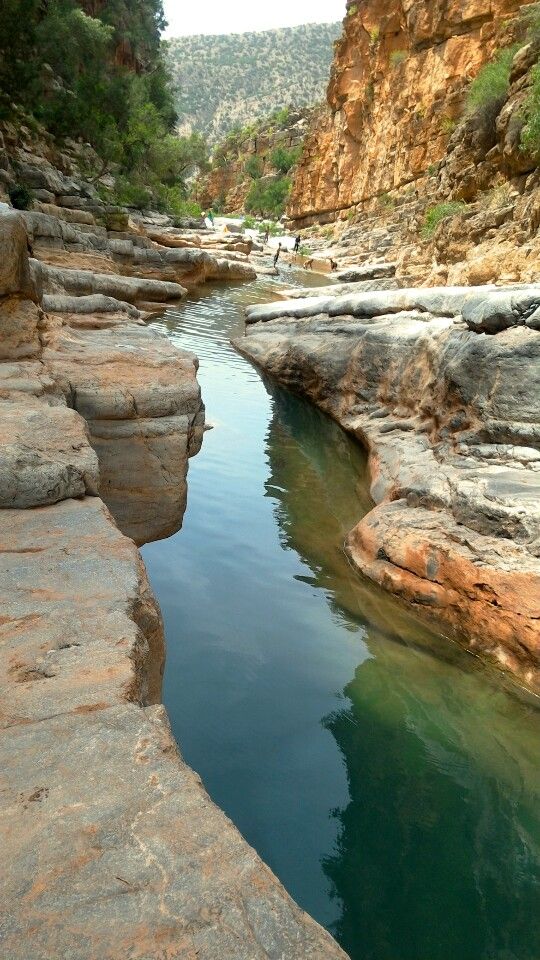
Beyond the main swimming area, the gorge continues deeper into the mountains through sections of increasing drama and beauty. The canyon walls rise higher, the passage narrows, and the river becomes a series of pools connected by small cascades and channels cut through the bedrock.
Walking deeper into the canyon — beyond the areas frequented by most visitors — reveals a landscape of extraordinary geological beauty. The sandstone walls display millions of years of geological history in visible layers: ancient seabeds compressed into rock, folded by tectonic forces and sculpted by water into the forms you see today. Running your hand along the canyon wall is touching the deep history of the earth.
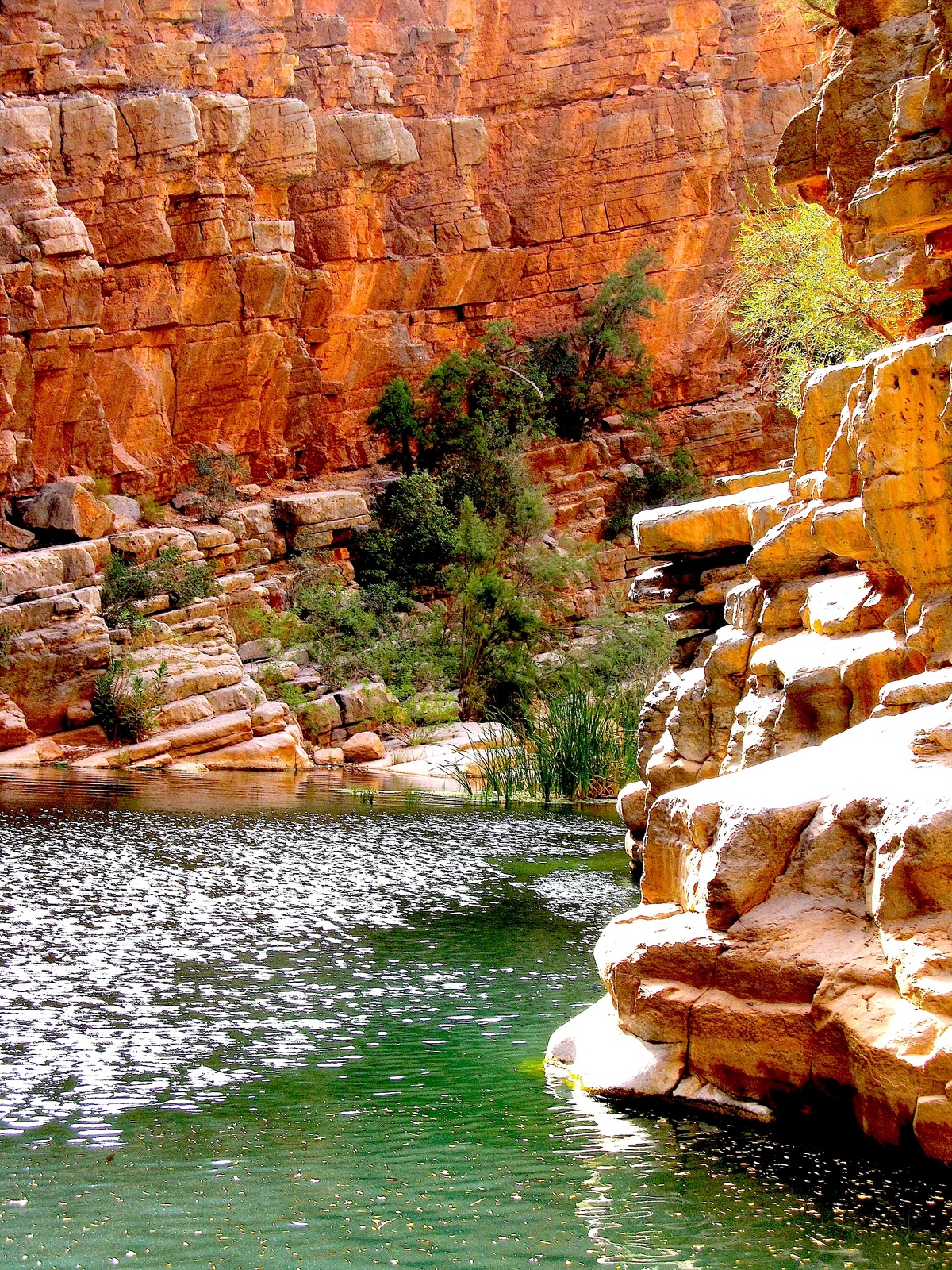
The interplay of light in the canyon is remarkable throughout the day. In the morning, when the sun is low, light bounces off the pool surfaces onto the canyon walls in dancing patterns of blue and gold. At midday, the sun reaches directly into the deepest sections, turning the water brilliant green and throwing the textures of the rock into sharp relief. In the late afternoon, the walls glow warm amber and the shadows lengthen into deep purple.
Getting to Paradise Valley from Agadir
Paradise Valley is located approximately 60 km northeast of Agadir, in the Anti-Atlas foothills near the village of Aït Belfaa. The journey takes approximately 1 hour to 1 hour 15 minutes by car.
By rental car — the most flexible option. Take the N8 road from Agadir toward Marrakech, then follow signs toward Aït Belfaa and Paradise Valley. The road is paved most of the way but the final descent into the valley is on a rough track — a standard car can manage in dry conditions but 4×4 is preferable.
By organized day trip — numerous tour operators in Agadir offer Paradise Valley day trips, typically combined with a visit to Immouzer des Ida Outanane or a camel trek. Prices typically range from 200 to 400 MAD per person including transport and a local guide.
By taxi — a grand taxi from Agadir to Paradise Valley costs approximately 300 to 400 MAD for the whole vehicle (negotiate in advance). Ask the driver to wait and bring you back — agree on a total price including waiting time.
When to Visit Paradise Valley
April to June — arguably the best time. The water level is good from winter rains, temperatures are warm enough for swimming but not overwhelming, and the vegetation is at its most lush and green. Wildflowers bloom along the canyon rim.
July and August — peak season, busiest period. The pools are crowded, especially on weekends. Water levels may be lower. Temperatures at the valley floor are hot but the water is refreshing. Come early in the morning to beat the crowds.
September and October — excellent timing. Crowds thin out, temperatures are still warm enough for swimming, and the light in the canyon is beautiful in the lower autumn sun. The valley can be dramatic after autumn rains.
November to March — the gorge is beautiful and atmospheric but the water is cold — very cold — and swimming is only for the brave. Flash flooding can occur after heavy rains, making the lower canyon temporarily inaccessible. Check conditions locally before descending.
What to Bring
- Swimwear — the pools are the main attraction. Do not forget it.
- Water shoes — the rocks in and around the pools can be slippery. Sandals that can get wet or water shoes are essential.
- Water and snacks — there are a few small stalls near the entry point but facilities inside the valley are minimal. Bring more water than you think you need, especially in summer.
- Sun protection — the canyon walls provide some shade but the approach and upper sections are fully exposed. High SPF sunscreen, a hat and sunglasses are essential.
- A towel — seems obvious but easy to forget.
- Cash — small entry fees may apply at certain sections. There are no ATMs in the valley.
- A waterproof bag or case for your phone or camera if you want to photograph from in or near the water.
Practical Tips for Paradise Valley
Arrive early — Paradise Valley gets busy, especially in summer and on weekends. Arriving before 10am gives you the best pools to yourself and the most beautiful morning light in the canyon.
Hire a local guide — for a small fee (50 to 100 MAD), local guides from the nearby villages will show you the best pools, the safest paths and sections of the valley that most visitors never find. They also help support the local community.
Respect the environment — Paradise Valley is a fragile ecosystem. Take your rubbish with you, do not use soap or shampoo in the pools, and stay on established paths to avoid damaging the vegetation.
Be careful around the pools — the rocks can be slippery, especially near the water’s edge. Some pools are deeper than they look. Check the depth before jumping and be aware of your swimming ability.
Combine with Immouzer — the village of Immouzer des Ida Outanane, 20 km further up the mountain road, has waterfalls (seasonal), a weekly Tuesday souk and spectacular mountain scenery. An excellent full-day combination from Agadir.
Paradise Valley: Agadir’s Greatest Natural Secret
Most visitors to Agadir never make it to Paradise Valley. They stay on the beach, visit the souk, perhaps drive to Taghazout — and they have a wonderful time. But those who make the journey into the Anti-Atlas foothills and descend into this hidden gorge discover a Morocco that few tourists ever see: wild, ancient, breathtakingly beautiful and completely unforgettable.
Paradise Valley earns its name. Plan a full day, bring a picnic, swim in the pools, walk deeper into the canyon than you think you should — and you will return to Agadir with one of the finest memories of your entire Moroccan journey. For more day trips and attractions around Agadir, visit Visit Morocco or explore our other travel guides on Explora Agadir.