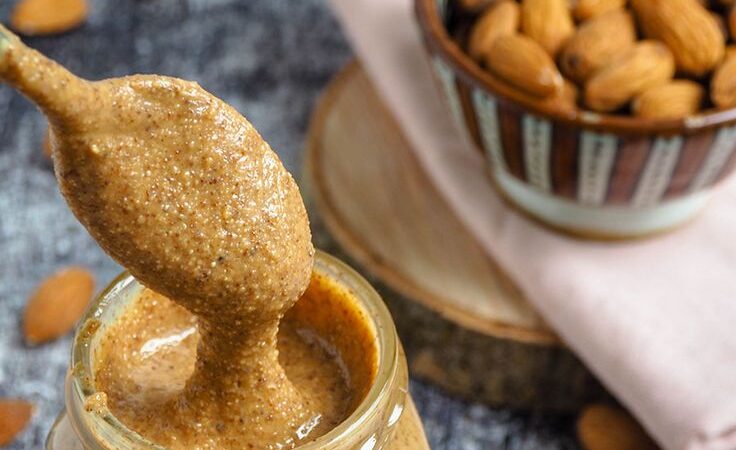
Amlou Morocco is one of the great culinary treasures of the Souss-Massa region around Agadir — an ancient Amazigh paste made from roasted almonds, pure argan oil and wild honey that has nourished generations of Moroccan families.. This ancient Amazigh paste, made from just three ingredients, is one of the great culinary treasures of the Souss-Massa region around Agadir. Once you taste it, you will understand why.
Amlou is Morocco’s answer to peanut butter — but richer, deeper and infinitely more complex. A thick, glossy paste of roasted ground almonds, pure argan oil and wild honey, it is simultaneously a food, a medicine and a cultural ritual. This is its story.
What is Amlou?
Amlou (also written amlou or amlou in Tamazight) is a traditional Amazigh condiment that has been made in the Souss-Massa region of Morocco for centuries. Its three ingredients are simple and unchanged: roasted almonds ground to a paste, pure culinary argan oil and raw honey — ideally wild honey from the Anti-Atlas mountains.
The result is a thick, dark amber paste with a texture somewhere between smooth peanut butter and tahini. The flavor is extraordinary — the deep, smoky richness of roasted almonds, the warm nuttiness of argan oil and the floral sweetness of honey all come together in something that is far greater than the sum of its parts.
In Amazigh tradition, amlou is served at breakfast and as a welcoming gesture to guests. To offer someone amlou is to offer them the best your household has to give. It is also traditionally served to newlyweds as a symbol of fertility, sweetness and abundance.
The Almond: Heart of Amlou
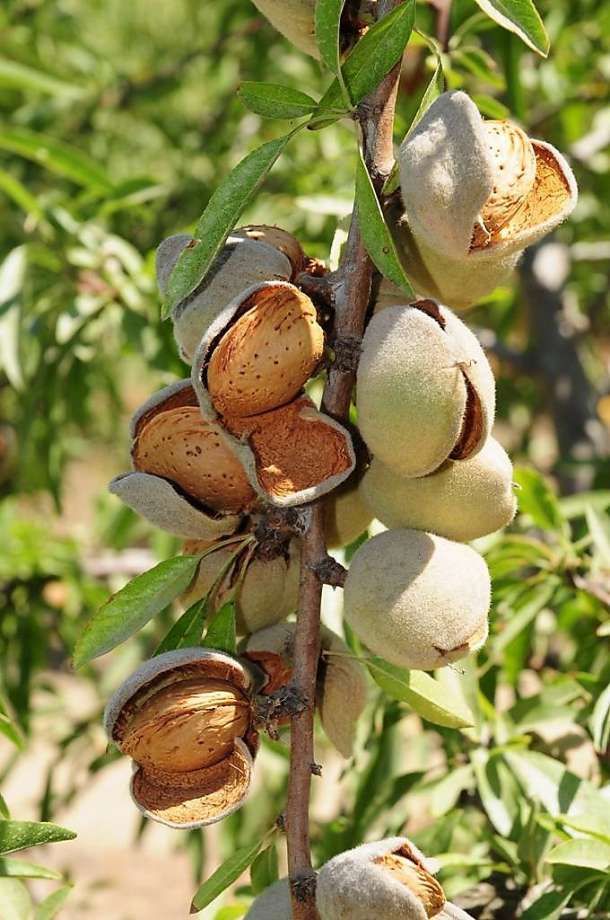
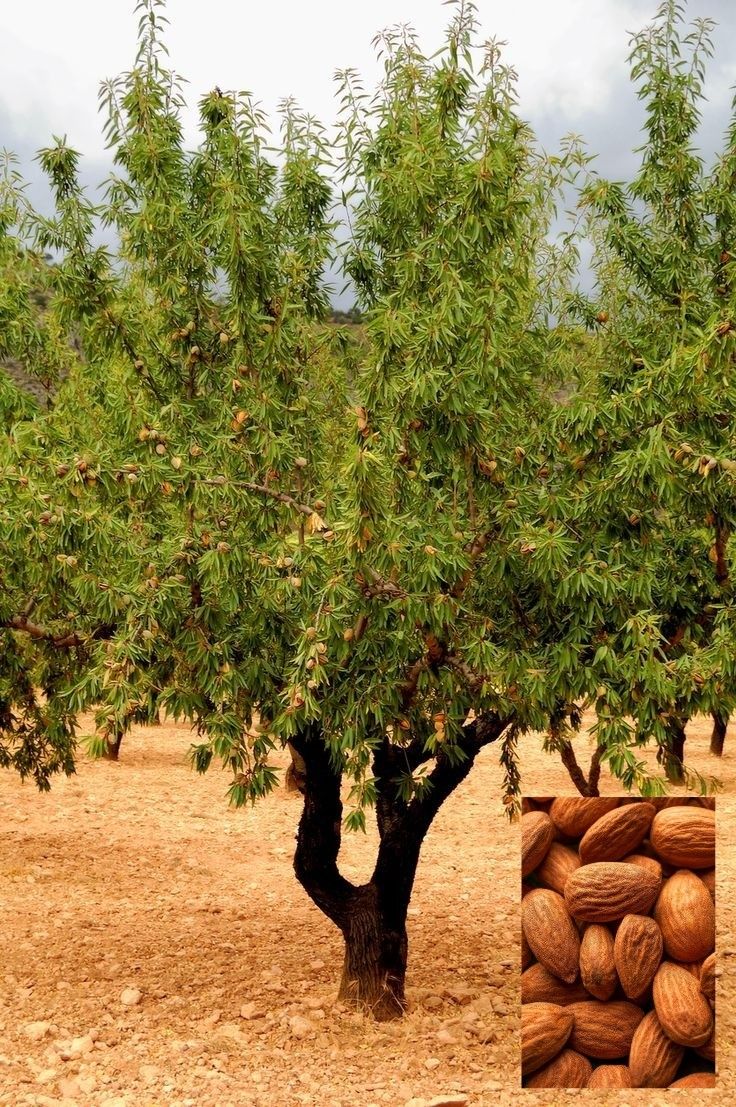
The almonds used in authentic amlou from the Souss-Massa region are not the large, commercial almonds common in supermarkets. They are smaller, more intensely flavored Moroccan almonds — grown in the rocky, sun-baked soils of the Anti-Atlas foothills between Agadir, Taroudant and Tiznit.
These almonds are harvested by hand in late summer, dried in the sun and then stored. When it comes time to make amlou, the almonds are first roasted — either in a traditional clay tagine over a wood fire or in a modern oven — until they turn a deep golden brown and fill the kitchen with their rich, nutty aroma.
The roasting is a critical step. Under-roasted almonds produce a pale, bland paste. Over-roasted almonds turn bitter. The perfect roast — achieved through experience and intuition rather than timers and thermometers — produces an almond that is deeply golden, aromatic and slightly oily at its center. This is the foundation of great amlou.
The Ancient Art of Grinding
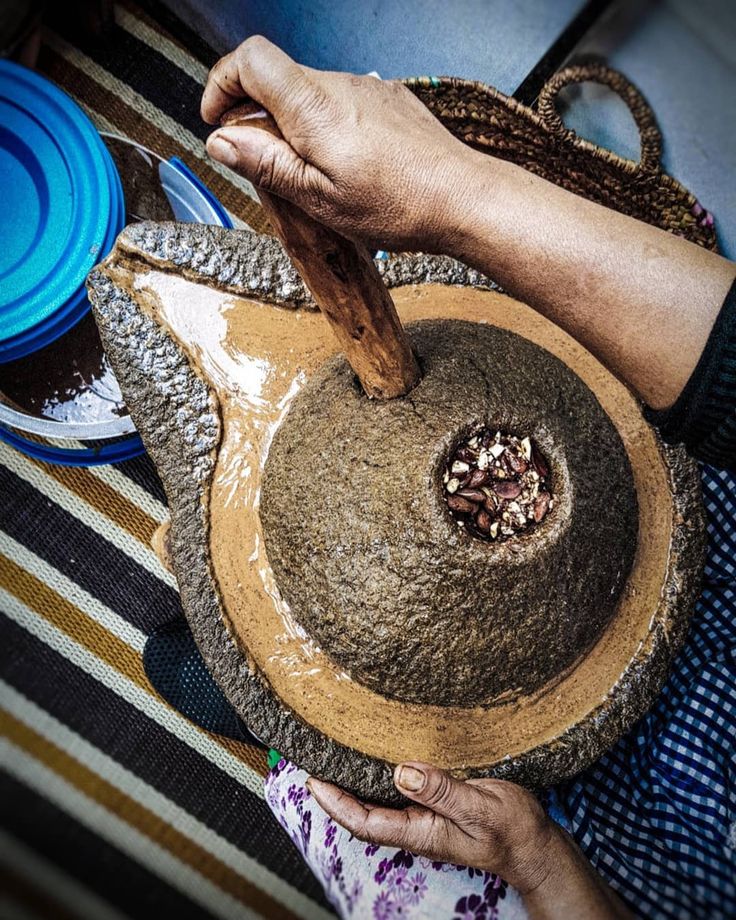
Once roasted, the almonds are ground on a traditional stone mill — the same heavy circular grinding stone used to produce argan oil and grind grain. The mill consists of two stones: a flat lower stone and a domed upper stone with a central hole through which the almonds are fed.
As the upper stone is rotated by hand, the almonds are crushed between the stones and emerge as a thick, fragrant paste from the outer edge of the mill. The process is slow, meditative and deeply rhythmic — the sound of stone on stone, the smell of roasting almonds, the feel of the wooden handle worn smooth by generations of hands.
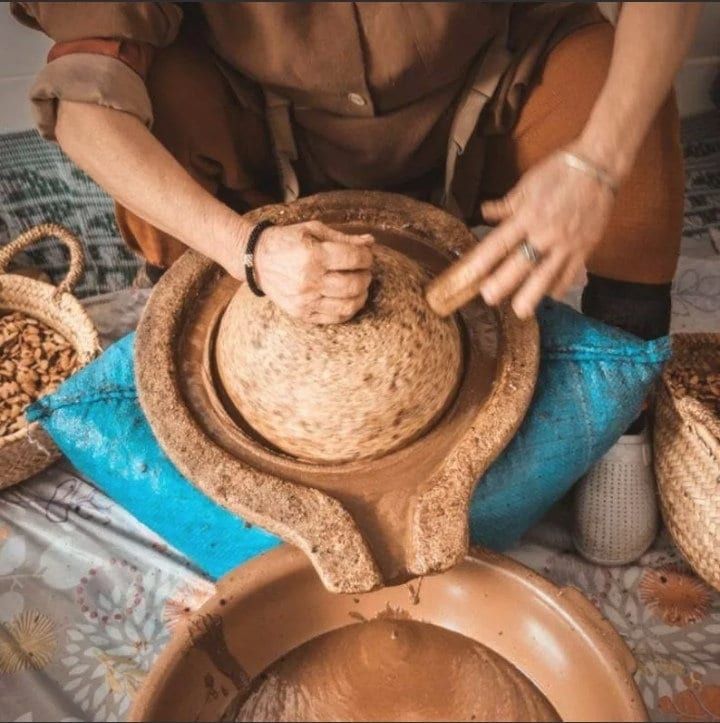
Traditional grinding produces a paste with a slightly coarser, more textured character than machine-processed amlou. Many connoisseurs prefer this texture — it retains more of the natural oils of the almond and has a more complex, layered flavor. Today, most commercial amlou is produced using electric mills, which produce a smoother but less characterful result.
The Three Sacred Ingredients
What makes amlou extraordinary is not just the quality of its ingredients but the perfect balance between them. The traditional ratio is approximately equal parts roasted almond paste and argan oil, sweetened with honey to taste — but every family and every cooperative has its own proportions, guarded as closely as any family secret.
Roasted almonds provide the body and depth. Their oils, released by roasting and grinding, give amlou its characteristic richness and staying power. Almonds are also exceptionally nutritious — rich in protein, healthy fats, vitamin E, magnesium and calcium.
Culinary argan oil is the soul of amlou. Without it, the paste becomes heavy and dense. The argan oil — produced from roasted argan kernels by the women’s cooperatives of the Souss region — adds a distinctive warm, nutty flavor that is impossible to replicate with any other oil. It also enriches the paste with omega-9 fatty acids, vitamin E and antioxidants.
Wild honey is the final element — and the one that elevates amlou from a nutritious paste to something truly special. The best honey for amlou comes from the Anti-Atlas mountains, where bees collect nectar from thyme, lavender, euphorbia and dozens of other wild mountain flowers. This honey has a complex floral flavor and a natural sweetness that balances the bitterness of the almonds and the intensity of the argan oil perfectly.
Amlou: A Feast for the Senses
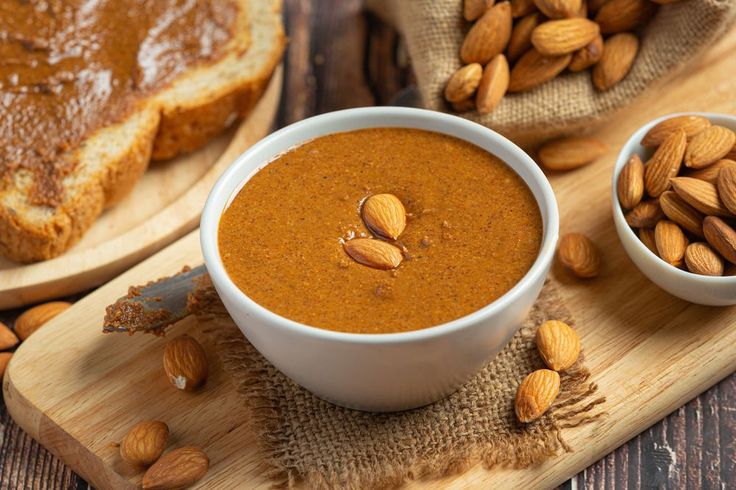
The traditional way to eat amlou is simple and perfect. Fresh khobz — the round Moroccan flatbread, still warm from the clay oven — is broken by hand and dipped generously into the amlou. A glass of fresh mint tea completes the picture.
The combination is extraordinary. The warm, yeasty bread absorbs the rich paste. The sweetness of the honey and the nuttiness of the almonds and argan oil coat the palate. The mint tea cuts through the richness with its bright, aromatic freshness. It is one of the most satisfying breakfast combinations in the world.
Beyond breakfast, amlou has many uses in Moroccan cuisine. It can be drizzled over pancakes (msemen or baghrir), stirred into smoothies, spread on dates, or used as a dipping sauce for fruit. Some innovative cooks use it as a base for salad dressings or as a finishing sauce for grilled meat.
Amlou in a Jar: The Modern Classic
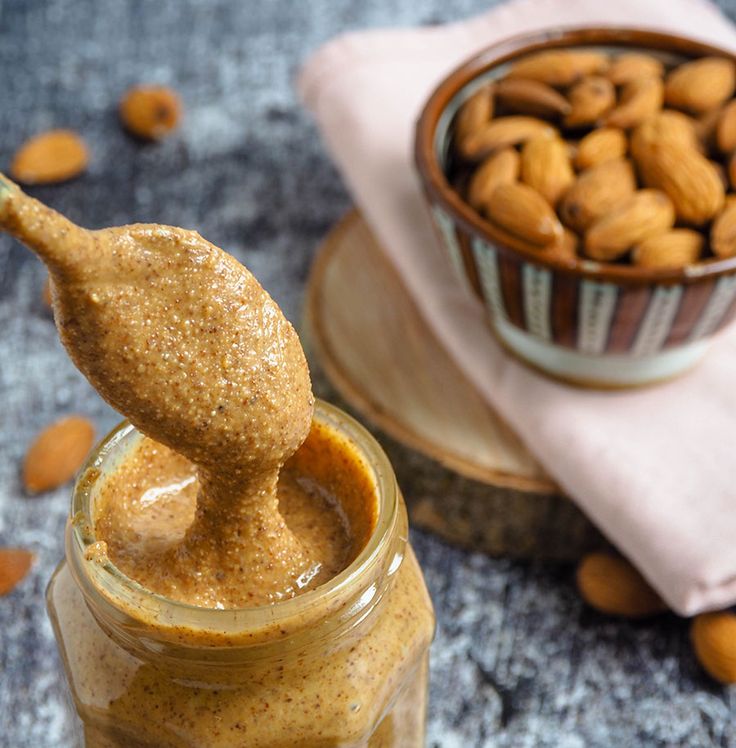
In recent years, amlou has made the journey from Amazigh households to artisanal producers, gourmet food shops and international export markets. Small cooperatives and family businesses across the Souss-Massa region now produce beautifully packaged amlou for sale in Agadir, Marrakech, and beyond.
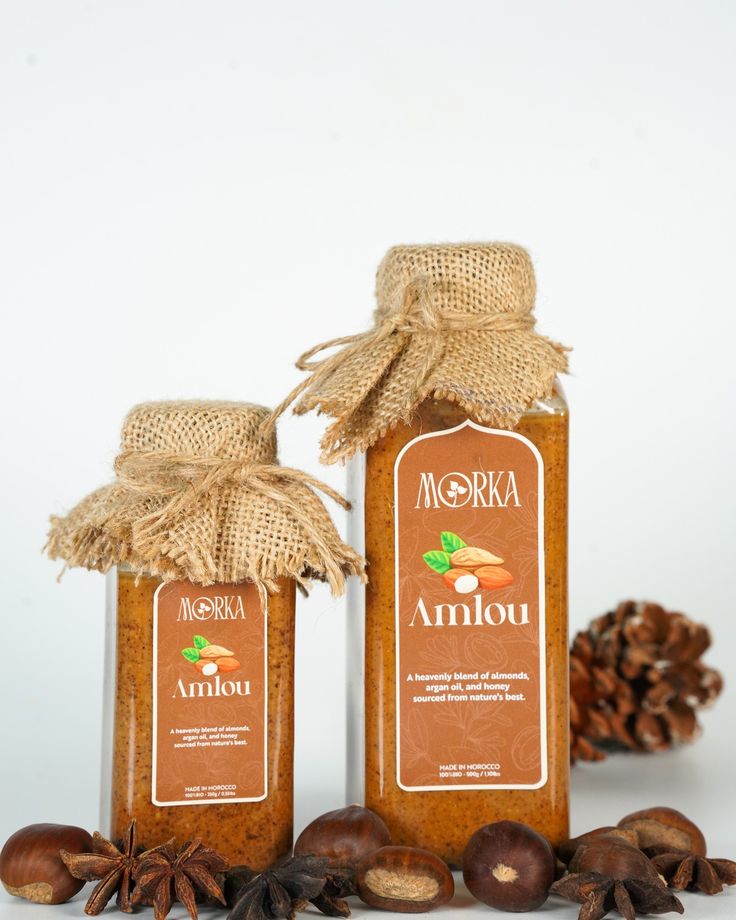
The best commercial amlou uses the same three traditional ingredients: roasted Moroccan almonds, pure culinary argan oil and natural honey. When buying amlou, look for products that list only these three ingredients — nothing else is needed, and anything else is a compromise.
Quality amlou should be thick but pourable, with a rich dark amber color and a strong aroma of roasted nuts. It should not be overly sweet or oily. The flavor should be complex and layered — bitter from the almonds, warm from the argan oil, sweet and floral from the honey — with a long, satisfying finish.
The Health Benefits of Amlou
Beyond its extraordinary flavor, amlou is genuinely nutritious — one of those rare foods that tastes indulgent but is actually good for you.
- Rich in healthy fats — both almonds and argan oil are excellent sources of monounsaturated and polyunsaturated fatty acids that support heart health
- High in vitamin E — argan oil contains one of the highest concentrations of vitamin E of any natural oil, supporting skin health and immune function
- Excellent source of protein — almonds provide high-quality plant protein, making amlou a nutritious and filling breakfast
- Natural energy boost — the combination of complex carbohydrates from almonds, healthy fats and natural sugars from honey provides sustained energy without blood sugar spikes
- Antioxidant-rich — almonds, argan oil and raw honey all contain significant antioxidants that help protect the body from oxidative stress
- Digestive support — raw honey contains natural enzymes and prebiotics that support gut health
In Amazigh tradition, amlou is considered a strengthening food — given to nursing mothers, people recovering from illness, and anyone who needs sustained energy for physical work. Modern nutrition science largely confirms what the Amazigh people have known for centuries.
Where to Find Authentic Amlou Near Agadir
If you are visiting Agadir and the Souss-Massa region, finding authentic amlou is easy — finding truly exceptional amlou requires a little more knowledge.
- Women’s cooperatives — the most authentic and fairly produced amlou comes from Amazigh women’s cooperatives along the Agadir to Essaouira road and around Taroudant. Look for the UCFA certification label.
- Souk El Had, Agadir — the city’s main market has several stalls selling homemade and small-batch amlou. Taste before you buy and look for fresh, aromatic paste with a dark amber color.
- Taroudant souk — arguably the best place to find authentic amlou, less touristy and more representative of real local production.
- Tiznit market — excellent amlou available alongside the famous Amazigh silverwork.
When buying amlou, always ask to taste it first. Good producers will be proud to let you sample their product. Look for a balanced flavor — not too sweet, not too bitter — with a rich, complex aroma of roasted nuts.
How to Make Amlou at Home
Making amlou at home is surprisingly simple. The quality of your ingredients will determine the quality of your amlou — so use the best Moroccan almonds, pure culinary argan oil and raw honey you can find.
Ingredients (makes one jar):
- 200g raw Moroccan almonds
- 4 tablespoons pure culinary argan oil (or substitute with good quality almond oil)
- 3 to 4 tablespoons raw honey, to taste
- Pinch of salt (optional)
Method:
- Roast the almonds in a dry pan over medium heat or in an oven at 180 degrees C for 10 to 12 minutes, stirring frequently, until deep golden brown and fragrant. Watch carefully as they can burn quickly.
- Allow the almonds to cool completely, then remove the skins by rubbing them between your hands (optional — leaving the skins on gives a more rustic, traditional texture).
- Grind the almonds in a food processor for 8 to 10 minutes, scraping down the sides regularly, until a smooth paste forms. The almonds will go through a crumbly stage before releasing their oils and becoming smooth — be patient.
- Add the argan oil and honey gradually, processing between each addition, until you reach your desired consistency and sweetness.
- Taste and adjust — add more honey for sweetness, more argan oil for a looser texture, a pinch of salt to enhance the flavor.
- Transfer to a clean jar and store at room temperature for up to two weeks, or in the refrigerator for up to a month.
Amlou: A Taste of Southern Morocco to Take Home
Of all the flavors of the Souss-Massa region, amlou is perhaps the one that most perfectly captures the essence of the place — the warmth of the sun, the richness of the land, the patience and skill of the Amazigh people and their deep connection to the natural world around Agadir.
A jar of authentic amlou is one of the finest souvenirs you can bring home from southern Morocco. It keeps well, travels easily and delivers a taste of the Souss every morning at breakfast. For more information about the food and culture of the region, visit Visit Morocco or explore our other articles on Explora Agadir.